EXTRA MUSCLE FOR THE TOUGH JOBS
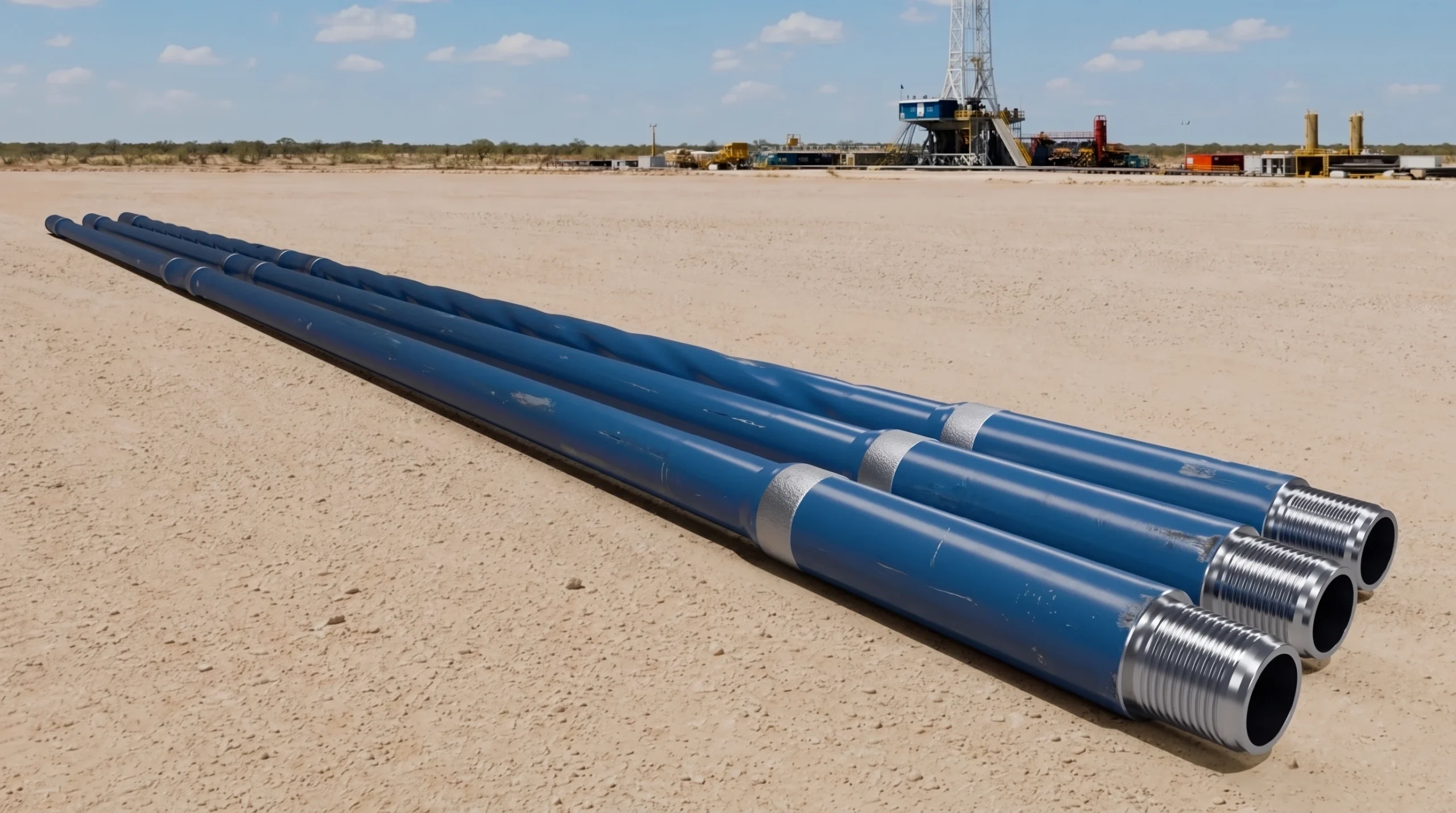
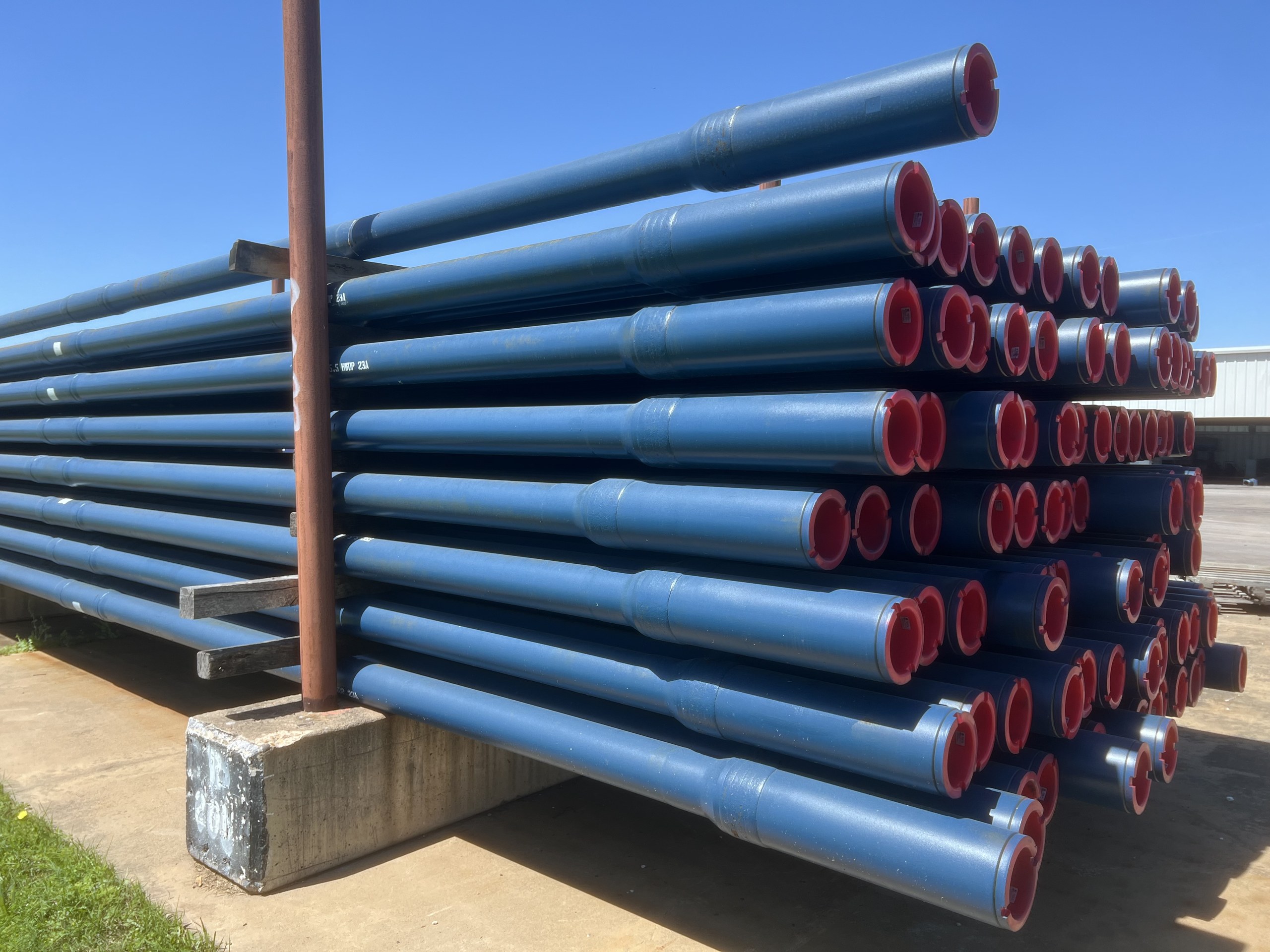
Heavy weight drill pipe (HWDP) serves a very important role downhole. It helps to alleviate the stress between the stiff drill collar and the more flexible drill pipe. The thicker wall allows it to absorb the stress and help prevent a potential failure from drill pipe fatigue. Our HWDP is engineered to have the same external dimensions as drill pipe to help the rig crew seamlessly transition from one to the other.
TSC Drill Pipe extends the wear-life of our API heavy weight drill pipe by only utilizing tubes with a robust chemistry and building the HWDP with a center wear pad.
PRODUCT RANGE
- Pipe Size Range: 2-7/8" through 5-1/2" OD
- Grades: All API Grades, TSC Grades, and Specialty Grades
- Connections: All API Connections, PTECH+®, TSDS™, TSC™, SSDS, and ATDS
- Hardbanding: Available on tool joints and center wear pad
- Custom configurations available upon request
Standard and Spiraled Body Options
Standard HWDP
Standard heavy weight drill pipe features a thick-walled, integral center section that provides additional stiffness and weight. It is ideal for vertical wells and applications where consistent weight transfer is required.

Spiraled HWDP
Spiraled HWDP includes helical grooves machined into the length of the pipe. These grooves reduce differential sticking and improve hole cleaning by promoting better fluid circulation. Spiraled HWDP is widely used in directional, horizontal drilling pipe, and extended-reach applications.

Where Operators Use HWDP with PTECH+®
- Extended-reach drilling where torque limits are the primary constraint
- Horizontal shale wells requiring long laterals
- High-dogleg curves where torsional resistance is critical
- High-vibration environments where standard connections are prone to failure
Frequently Asked Questions
What primary mechanical function does Heavy Weight Drill Pipe serve?
Heavy Weight Drill Pipe (HWDP) acts as a flexible transition zone between rigid drill collars and flexible drill pipe. Its increased wall thickness and central upset absorb bending stresses, mitigating fatigue failures at the top of the bottom hole assembly (BHA).
Which connection profiles are recommended for HWDP in high-torque applications?
High-torque double-shoulder connections are recommended for HWDP in directional and horizontal wells. These thread profiles provide increased makeup torque capacity and prevent connection yielding under combined bending and torsional loads.
Can hardbanding be applied to HWDP tool joints and wear pads?
Yes. Casing-friendly hardbanding can be applied to both the tool joint and center wear pad of the tube body. This wear protection extends pipe life downhole and helps prevent casing damage.
How does HWDP reduce differential sticking compared to drill collars?
Because HWDP features an elevated central upset and smaller body diameter than solid drill collars, it maintains a reduced contact surface against the borehole wall. This lower contact area minimizes side forces that cause differential pressure sticking.
Can HWDP impact extended reach laterals?
HWDP can also be run in the vertical section of the hole on extended reach lateral wells to provide a stiffer tubular element for increased torque transfer downhole during both rotary and slide drilling operations. The increased mass provides additional Weight on Bit (WOB), which helps to improve bit engagement and drilling performance.
Global Network of Service & Repair Centers

FAST DELIVERY

24/7 SUPPORT